
Services / Software development

Software that fits how your business works.

When spreadsheets, manual steps or systems that do not talk to each other are slowing your team down, we design and build software around the way you work, then keep it running.

The problem we solve

Your process has outgrown the tools you have.

Most of the software we build starts with a familiar problem: information re-typed between systems, data from devices that nobody looks at, or a process that lives in someone's inbox.

We fix that with software built for the job: web and mobile applications, real-time dashboards and alerts, and integrations that bring your data into one place.

Proof

Systems people rely on every day.

Two organisations that use software we build and support.

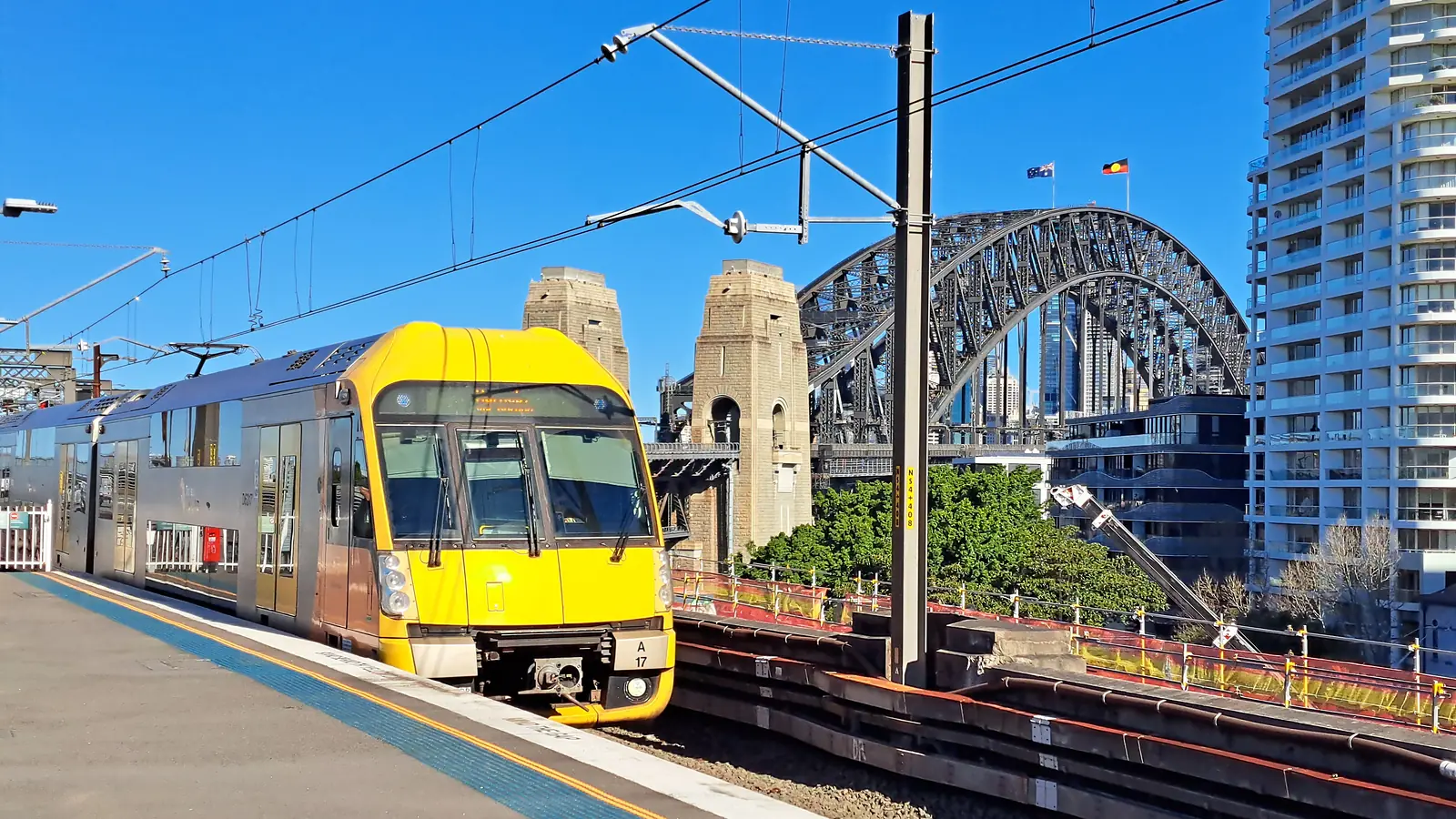
A yellow Sydney suburban train at Milsons Point station, with the Sydney Harbour Bridge behind it.

Photo: Tamgarat, Wikimedia Commons, CC0. Not a Sydney Trains image.

Industrial IoT

Sydney Trains

Sydney Trains operates the rail networks across Sydney. Jundra built and supports its CMO condition monitoring system, which brings data from trackside and train monitoring devices, such as bearing and brake temperature sensors, into one central dashboard.

The system sends automated alerts to maintenance staff when it detects faults, and its dashboard runs on one of the large screens in the Rail Operations Centre. Jundra has supported and developed the system for more than a decade.

The system also takes in data from devices such as angle-of-attack sensors, wheel impact load detectors and pantograph condition monitoring systems, and stores it in a central database for analysis and reporting.

Read about this work
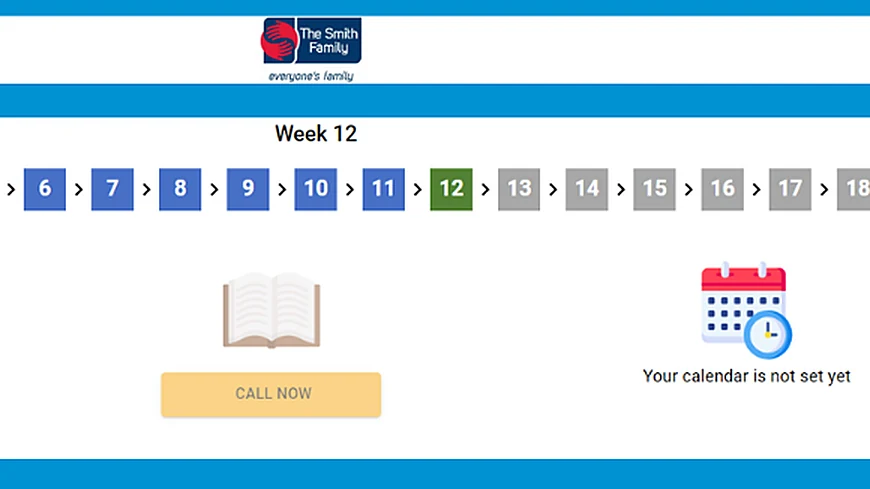
The Student2Student reading room in Chatty Kids, with The Smith Family logo and a week-by-week progress tracker.

Screenshot: Student2Student on Chatty Kids, built and managed by Jundra for Chatty Kids Pty Ltd.

Literacy software

The Smith Family

The Smith Family is an Australian charity focused on educational support. It uses the Chatty Kids literacy software to run Student2Student, its peer reading program, in which students read together in supervised online sessions.

Chatty Kids is built and managed by Jundra for Chatty Kids Pty Ltd, including maintenance, reporting and security work.

About Chatty Kids
How we work

Seven steps, from problem to support.

Every project is different, but the path is the same. Each step ends with something you can see and check. What each step delivers is set out in your written proposal.

Our software process: understand, build or buy, propose, prototype, build and integrate, test and release, support and improve. 01 Understand the problem 02 Build or buy honest comparison 03 Proposal steps and price 04 Prototype try it early 05 Build and integrate 06 Test and release 07 Support and improve
Our software process: understand, build or buy, propose, prototype, build and integrate, test and release, support and improve. 01 Understand 02 Build or buy 03 Proposal 04 Prototype 05 Build 06 Test 07 Support
  1. Step 1: Understand the problem

    We talk to the people who will use the software and map the process, the data and the systems you already run, so the build solves the right thing.

    What you get

    A plain-English summary of the problem, the people involved, the data and the systems it touches.

  2. Step 2: Build or buy

    We compare off-the-shelf products with a custom build and recommend the most cost-effective option. Sometimes that means configuring something you can buy.

    What you get

    A straight recommendation, even when the answer is not to build.

  3. Step 3: Proposal and plan

    A written proposal sets out the steps and the price before work starts. If you accept it, the next stage is a paid MVP: the smallest working version that proves the idea, with a fixed scope, timeframe and deliverables agreed in the proposal, so you can decide whether to continue once it is done.

    What you get

    A written proposal with the scope, the steps and the price.

  4. Step 4: Design and prototype

    We design the screens and the data first, then build an early working version so you can try the idea before it is scaled up.

    What you get

    A prototype you can click through and test with your own people.

  5. Step 5: Build and integrate

    We build the web, iOS or Android application and connect it to the systems and devices you already have. Data from many sources is brought into one database, cleaned and ready for reports.

    We use proven, widely used tools: Python, Flutter for cross-platform mobile apps, Swift for native iOS and Kotlin for native Android, React and Next.js for the web, Node.js and .NET with C# on the server, SQL Server and MongoDB databases, and Microsoft Azure or Google Cloud.

    What you get

    Working software, connected to your existing systems, delivered in stages you can review.

  6. Step 6: Test and release

    Formal testing before release, so problems are found by us and not by your users.

    We build security into every client project: multi-factor authentication, code review, dependency and vulnerability scanning, a secrets manager and backups. For systems that need it, we arrange penetration testing by independent specialists.

    What you get

    A tested release, a clear record of what was tested, and the security measures in place.

  7. Step 7: Support and improve

    Once it is live, we look after it: maintenance, reporting, security fixes and improvements. We reply to support requests within one business day, and offer maintenance and support contracts negotiated to fit your needs and budget. Every project includes a 60-day defect-fix period after delivery, in which we fix defects in our work at no charge. This is in addition to your rights under the Australian Consumer Law.

    What you get

    Documentation and a handover to your team, and software that keeps working as your business changes.

What you get

Software you can rely on.

What we build and look after, depending on the project.

  • Web and mobile applications
    Web, iOS and Android applications, built and maintained by our team: cross-platform apps in Flutter, or native iOS (Swift) and Android (Kotlin) apps when the project needs it.
  • Real-time dashboards and alerts
    Data from field devices turned into dashboards and alerts people can act on.
  • Integrations
    New software and sensors connected to the systems you already run.
  • One clean database
    Data from many devices and systems brought together, cleaned and ready for analysis and reports.
  • Testing and release
    Testing before release, to a plan agreed with you.
  • Documentation and handover
    A record of what we built and how it runs, handed over to your team.
  • Support, maintenance and security work
    Replies within one business day, and maintenance and support contracts to fit your needs and budget.
Is this right for you?

Software, when off-the-shelf does not fit.

A good fit if

  • Your team re-types the same information into more than one system.
  • You have data from devices or systems that nobody can see in one place.
  • You need a web or mobile app for staff, customers or people in the field.
  • You have a system that needs ongoing support, security work or improvement.

Probably not the right fit if

  • A product you can buy off the shelf already does the job well. We will tell you if that is the case.
  • You need a quick website or a marketing site only.
Working with us

What you can count on.

You own the work

Everything we create for you, handed over into accounts you own. Open-source and third-party parts keep their own licences.

60-day defect fixes

We fix defects in our work for 60 days after delivery, at no charge, on top of your rights under the Australian Consumer Law.

Replies in one business day

Plus maintenance and support contracts to fit your needs and budget.

Security built in

Multi-factor authentication, code review, vulnerability scanning, a secrets manager and backups, with penetration testing by independent specialists for systems that need it.

Your data, your rules

Never put into free or consumer AI tools. Open-source models on your own servers, or commercial AI services under business terms that do not allow your data to be used for training.

Insured and prequalified

Professional indemnity, public liability and products liability insurance held. Prequalified supplier on the NSW Government ICT Services Scheme (SCM0020).

Common questions

Questions we get asked.

Do you build mobile apps?

Yes. We build web, iOS and Android applications: cross-platform apps in Flutter, so one code base runs on both, or native iOS apps in Swift and native Android apps in Kotlin when the project needs it.

What technology do you use?

Python, Flutter, Swift and Kotlin, React and Next.js, Node.js, .NET with C#, SQL Server and MongoDB, on Microsoft Azure or Google Cloud. We choose what suits your systems and your team, and we work with what you already run.

Can you work with the systems we already have?

Yes. Integration is a large part of what we do. We start by reviewing what you have and what it can already do.

How does a project start, and how is it priced?

After the first conversation, we send a written proposal with the steps and the price, so you know what you are agreeing to before work starts. If you accept it, the next stage is a paid MVP with a fixed scope, timeframe and deliverables agreed in the proposal, so you can decide whether to continue once it is done.

Who does the work?

Jundra's senior engineers, with additional specialists brought in for larger projects.

Do you support software after it goes live?

Yes. We reply to support requests within one business day. If you need more, we offer maintenance and support contracts negotiated to fit your needs and budget, as we do for Sydney Trains.

Who owns the work?

You do. You own the work we create for you and you pay for: the code, designs, trained models and documentation. We hand it over into accounts you own, not ours. Open-source components and third-party or commercial AI models stay under their own licences, and any tools we had before your project are licensed to you for use with the work. Your proposal lists both. Every project includes a 60-day defect-fix period after delivery, in which we fix defects in our work at no charge. This is in addition to your rights under the Australian Consumer Law.

What if the person who built it is unavailable?

You are not dependent on one person. Your code, documentation and accounts are in your name. Every handover includes the source code, architecture notes, a runbook for running and recovering the system, and the access details, handed into your own accounts, so another engineer, ours or yours, can pick it up.

Other capabilities

Tell us what you are trying to solve.

Email us a few lines about the problem. We reply within one business day, from Sydney, Australia.

Email admin@jundra.com